Friday, April 17, 2015

Ryu/Rie aka Maria ; Asuka/Mahoro aka Jeanne : two romances with similar concepts written in a very different way


Jetman and Abaranger share a similar concept : the main villainess is none other than the brainwashed girlfriend (or wife) of one of the main heroes. Indeed, Jetman's  Ryu Tendoh/Red Hawk had a girlfriend, Rie Aoi who ended up becoming a Vyram general, Maria, and Asuka/Abareblack's wife Mahoro became Evolian's messenger of destruction Jeanne.

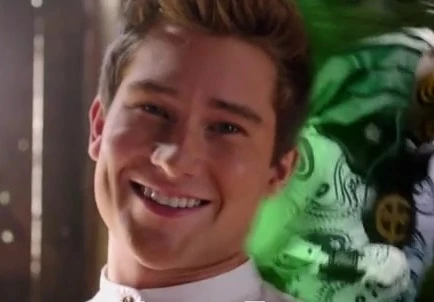
However, while Abaranger obviously took that concept from Jetman, it's worth mentioning that both storylines were written in a very different way within their respective series, well beyond merely their ending (Ryu and Rie's romance ended up in tragedy, while Asuka and Mahoro's had a happy ending (the last photo shows Asuka and Mahoro together at the end of the show, full of hope for their future).


This blog post is gonna review both romances, and the way they were written in their respective sentai series


1) How it started

Ryu and Rie met when they were already adults (Ryu tells Kaori about his first meeting with Rie). Their romance was a happy one, in a peaceful environment, involving going out , playing games, and Ryu enjoying his girlfriend's amazing piano playing (she played flawlessly Beethoven's Appassionata piano sonata). They were also working together as fellow soldiers, but before Vyram's invasion, they didn't suffer the hardships of war. Ryu and Rie had the classic life of a boyfriend and girlfriend in happy times.

Asuka and Mahoro had a different story. They knew each other since they were children. However, unlike Ryu and Rie, they suffered since they were very young from the harships of war and the Evolian's invasion, forced to hide and fight as rebels. It was a very hard life, and often Mahoro, her brother Mizuho and Asuka felt despair. Like Rie, Asuka was skilled in playing music. Asuka was a very good harmonica player, and when his friends were sad, he played the harmonica to cheer them up. Mahoro and Asuka ended up falling in love with each other, and their romance was also a way to fight against their terrible situation, find comfort and hope. Asuka and Mahoro eventually married, the day before they planned an attack against the Evolian, hoping victory and a better future.

2) How lovers ended up separated, and how the ladies became villainesses

One day, after a successful operation against an out of control robot, Ryu and Rie have been called by their commander, Aya Odagiri, because she wanted to involve them in a special project, the J-project, involving using special waves, Birdonic waves, to give selected humans superpowers, and allowing them to become very powerful soldiers, the Jetman. Both Ryu and Rie agreed, especially since it allowed them to work together. Indeed, Ryu had the time to be exposed to the waves, and to become a Jetman, Red Hawk. However, before Rie had the time to follow her lover's steps, the Vyram attacked the Earth Guardian's mothership, and while evacuating, Rie ended up sucked in a outside the ship, despite Ryu's efforts to save her. Ryu and Aya survived, but they believed Rie had died. However, Rie was still alive, but she had become a Vyram, Maria, after being brainwashed by the cruel Vyram general, Radiguet.

In Asuka and Mahoro's case, Mahoro and her brother had gone willingly in a mission to attack the Evolian. However, during that mission, they ended up being captured by the Evolian, and Dezumozorya, the Evolian god, decided to use Mahoro as a vessel to introduce his essence, convincing her that Asuka had given up on her, and went to another woman, to bring her into despair and break her resistance. He eventually succeeded,  basically raped her, and eventually, a kid holding Dezumozorya's essence was born, the Messenger of Dawn Lije. After the kid's birth, Mahoro completely threw away her former identity.
Mizuho and Mahoro felt intense hate against Asuka, who they felt had betrayed them, and both agreed to get revenge against him. Dezumozorya send some of his powers to Mahoro and she became the cruel messenger of destruction, Jeanne.
Actually, Asuka hadn't given up on them, even deciding to use a forbidden armor to save them. Unfortunately, the armor turned him into a mindless killing machine, even making him kill his fellow Ryujin. Asuka eventually was defeated and freed from the armor, but at that time, like Ryu, he believed his wife was dead.

3) Maria and Jeanne : their role within the villain group. 

While Maria and Jeanne were both fearsome and cruel generals in their groups, the way, and the motivations they attacked the heroes, humans and the world were pretty different.

Maria, despite being human herself, viewed herself as a true Vyram, and she shared the snobbish ways of her fellow Vyram. Like them, she attacked humans because she  despises them as inferior creatures, and loved tormenting sadistically with them as a little child  torments little animals (as suchn the Vyram aren't unlike Liveman's Volt, with the Volt members feeming superior to other humans because of their superior brain). Making humans suffer and even killing them was a game for her, exactly like her fellow Vyram, notably Tran. In the first half of the show, the Vyram are acting like snobbish people who feel superior and discuss how they despise humans and get ideas for their sadistic plans from human behaviour. That behaviour is pretty much what the Vyram have in common with each other, and Maria is like her peers.
Maria's plans are often using themes linked to appearance and female weaknesses. It's telling that she used a mirror, a diamond, a camera,  a monster recording female voices (satirizing the way women are talkative) as basis to make dimensional beasts. She often fights alongside her monsters, and is a dangerous fighter.
But other than tormenting humans in general, Maria, like her fellow Vyram, also wanted to defeat the Jetman, since the one who defeats them is gonna be the leader of the Vyram. She hates the Jetman and desires to defeat them as much as her fellowVyram. In her determination to defeat them, she even created a new kind of Dimension Beasts, the Bio Dimensional beasts, using animal DNA, and sometimes even puts herself in danger to defeat them, as seen during the shadow Jetman plot, and at the end, when she turned herself into a vampire like creature to get stronger.
However, while a dangerous enemy, and despite her deep desire to become the leader of the Vyram, she isn't seen by her peers as a dangerous rival. Most of the major plots involving rivalries among Vyram or between fellow evildoers are between Radiguet and another villain, such as Empress Juuza, the Majin demons and, eventually, Tranza, a grown up Tran. Radiguet never saw Maria as a dangerous rival, and always felt she was his property. And indeed, in a lot of cases, Maria behaved pretty recklessly, and would have been defeated if she wasn't protected by her fellow Vyram Grey, a robot who is in love with her. In fact, in most of the plots involving rivalries between villains, she's an helper, like when she helped Radiguet get the BEM meteorite, or when she was involved in Tranza's Veronica plot.

Jeanne was a very different enemy. While Maria was driven by snobbery, sadism, and ambition, Jeanne was driven by vengeance and lust for destruction. However, Jeanne was a very pragmatic villainess. Her plans either involved getting a new weapon, such as power to handle the dark armor or finding new Bakuryuu she could manipulate, or using those weapons to make mass destruction. While she wasn't above tormenting humans, she mostly did it as a means to an end, rather than doing it for pure sadistic reasons.
Unlike Maria, who's acting like her fellow Vyram, Jeanne was pretty much an outcast among the Evolian. She had no affinity for her fellow Messengers, Mikela and Voffa, and often stays by herself, training, or involved in her own plans. Her indifference for the other Evolian generals can be seen when she didn't help Mikela and Voffa fight the Abaranger during the "schoolgirl monster " plan, or how she didn't care about getting Lije back in Dino Earth in the Rakopima plot. She never really worked with Trinoids. She mostly used the dark armor and her sword as weapons, and sometimes, used Giganoids and even when she could, Bakuryuu as weapons of mass destruction. 
However, unlike Maria, Jeanne is a key enemy in Abaranger's major plots, as the only Evolian general who's regularly leaving headquarters during the first half of the show, and she's the one who faced the most the Abarangers (especially Abareblack) notably during the key plots of the quest for the lost Bakuryuu or her quest to gain back the power of the dark armor. However, while she's very active before Abarekiller's appearance, her involvement decreases when Abarekiller became the major opponent of the Abarangers, until her final showdown as Jeanne during the Anomalogaris/Barugigenia plot.

4) Maria and Jeanne's relationship with the heroes

Maria wished to defeat the Jetman to become the leader of the Vyram. As such, she wanted to defeat all of them and attacked them without discriminating. It's especially obvious during the first half of the show, when the Jetman don't know she's Ryu's brainwashed fiancee. Her hate wasn't against one hero, but against the Jetman as a group.  She often targeted Ryu, Gai and Kaori, but she also attacked Ako and Raita when given the opportunity.  She attacked them either by herself, or with the help of a Dimension Beast, or with her fellow Vyram, notably Grey and Tran. She was very sadistic when attacking them, enjoying their pain especially when her enemies were in a weak position.

Jeanne's hate was mostly targeting Asuka/Abareblack, and she was always ready to attack him and torment him. In fact, her desire to destroy the world was a lot her way to get revenge against Asuka. Asuka also hated Jeanne because he believed Jeanne was a creature who had killed her lover Mahoro and took her body. However, she very seldom attacked the other Abarangers, usually avoiding direct confrontations when she feels she's not in a stronger position. While she saw the other Abarangers as enemies to defeat, she didn't really hate them, and never specifically targeted them. In fact, her only other strong rivalry with an Abaranger was with ... Abarekiller, who was an enemy of the other Abarangers. She opposed him because she wanted to get back the powerful weapons he had taken.

5) Maria and Jeanne faced with their former identities

By the time Maria and Jeanne started attacking the heroes, they had forgotten about who they were originally.
In Maria's case, she saw herself as a pure Vyram, not as an human.  Indeed, when in episode 13, Maria was starting playing the piano, she didn't remember why she was skilled at it. And when Ryu discovered her true identity, she responded with pure denial, seeing Ryu's words as foolish words, deepy offended by his love and kindness, even hating him  even more for seeing her as a human. Several times, she viciously attacked Ryu, refusing to listen to his pleas to have her turn back into Rie. She even pretended once to be Rie to have Ryu lower his guard, and attacked him. It's only when her mind was completely breaking apart because of Radiguet's insane plan to turn her into a dimensional Beast, that Ryu's kindness managed to go through her and make her turn back into Rie.

In Jeanne's case, Jeanne had rejected her past as Mahoro, but she still remembered how she felt betrayed by Asuka, and she was driven by her hate against him. Because her main motivation for doing evil was linked to her past, Jeanne was more easily reminded of her past than Maria, and when a mysterious girl (looking like Lije) appeared and reminded Jeanne of her past and her love for Asuka, she ended up so tormented that she wasn't able to fight afterwards. While at first she responded with denial, that denial was much more forced than Maria's.

6)  What happened after the heroes realize their enemy's true identity

In both shows, the heroes are convinced that Maria and Jeanne aren't really former humans, or even their comrades's former girlfriends until about the 30'.
Ryu realizes in episode 31 that Maria is really Rie when Maria briefly turned back into Rie, until Radiguet brainwashed her again, and Asuka realized Jeanne was really Mahoro in episode 32, when Asuka sees the bracelet she gave Mahoro worn by Jeanne.

When Ryu and Asuka discover the truth about their girlfriends's fates, they both tried to save them, instead of seeing them as enemies.

Ryu tried to undo Rie's brainwashing, but failed and even almost lost his mind, broken by the fact he was able to find back his love, only to lose her so quickly. Ryu eventually managed to overcome his pain, but whenever he faced Maria, he was seeing her as Rie and had a lot of trouble fighting her, while she was still seeing Ryu as her hated enemy, even hating him more than the other Jetman because of his feelings for her (previously, she equally hated all Jetman). Despite Rie being Maria and a dangerous enemy, Ryu loved her. When Maria ended up unconscious after another fight, and threatened by cold because of an heavy rain, Grey allowed Ryu to stay with her to bring her the warmness he couldn't give her because of his robotic nature. Ryu was very protective of her, because of his deep love, at last being able to show his love when she wasn't able to see him. Unfortunately, as soon as she was healed, she was the hateful enemy she was just before. Despite everything, Ryu loved her whatever she was, despite everything hse had done, and, after many tried, eventually managed to break through her brainwashing during the "Maria becoming a vampire like witch" arc, when her mind was already messed up by her transformation.

In Asuka's case, Jeanne had already her memories awakened by the mysterious girl when Asuka discovered the truth and Asuka managed to break through her and managed to have Jeanne become back her lover just after convincing her he never betrayed her. At the end, the only reason Mahoro was remaining evil was because of the influence of the evil armor, and Asuka did the ultimate sacrifice to save his wife : defeating her and take the power and curse of the armor.

7)  Rie and Mahoro's relationship with the heroes

While Rie was Ryu's true love, she had already disappeared to be turned into Maria when the other Jetman appeared. After episode 1, Rie only appeared in flashbacks, and in briefly in two episodes, episode 31 and episode 49, her final episode. In episode 31, she only met back Ryu, and in episode 49, after becoming back Rie, she only talked either to Ryu or to the other Vyram, Radiguet or Grey.
She never had any interactions with the other Jetman as Rie.

Unlike Rie, Mahoro had become good again after episode 32, and remained so during the remaining episodes. As a result, she had much more opportunities to interact with them as a good woman.
After having been freed of the armor, she was amnesiac when the heroes found her. Because she didn't remember her actions as the evil Jeanne, because the heroes realized she was none other than their comrade's wife, and because the Abarangers are incredibly kind people, they quickly offered her their friendship, a shelter and a job.
Mahoro quickly became very friendly with the Abarangers, and their friends Emiri, Ryunosuke and little Mai, working with them, having dinner with them, and even eventually, helping them as technical support in their fight against the Evolian, and the heroes did everything to help her feel at home with them and find back her memories. At the end, the heroes had much more memories of Mahoro as the good Mahoro, who had shared their daily lives, than memories of the evil Jeanne they pretty much seldom confronted directly.
She eventually gained back her full memories when Asuka at last reappeared before her eyes wearing the dark armor. Despite gaining back her memories, including her past as Jeanne, she didn't hate her husband any more, and loved him even more than ever. She desperately wanted her husband to escape the destructive power of the dark armor, and eventually, went back to the Evolian to become Jeanne again, to gain the weapons she needed to destroy the evil armor (her sword and Abarekiller's help) and free her husband.
Afterwards, she remained with the Evolian, but in truth used her Evolian identity as a spy to help the heroes defeat the enemy, but also because she wanted to save her daughter Lije, who had grown up into Lijewel, at last seeing her with a mother's eyes, despite the tragic circumstances linked to her birth. She saw the Abarangers, especially her husband Asuka, as her allies, and was able to send them major information which ended up being a major help to defeat the enemy. The final arc was as much about defeating the evil Evolian god as it was "mission : save Mahoro".
At the end, Mahoro had become pretty much a member of the "Abaranger family".

8) Rie and Mahoro facing their guilt

Of course, as good people, Rie and Mahoro ended up feeling intense guilt over their actions as Maria and Jeanne.
In episode 49, Rie had the time to remember her actions as Maria, and was insanely ashamed by them. She felt that there was no way back after commiting all those evil acts, and she was so ashamed that she didn't even joined back Ryu when Radiguet appeared, seeing herself as a Vyram general. Actually, she wasn't anymore a true Vyram, and decided to strike Radiguet, taking him off guard, to get revenge against him and his brainwashing.
However, despite that, she felt that things couldn't be what they were before, because she felt rotten by her evil actions, and she didn't feel she had the right to be loved by Ryu.
When Radiguet gave her the killing blow, she didn't even let Ryu approach her, because of her shame, and the only one who was there for her final moments was her Vyram friend Grey, whom, even as Rie, she felt great affection. Even if deep down, Rie wished to start over with Ryu in her final moments, she was too much overcome with guilt to even be able to be with him at that time. She felt irreversibly stained by her time as a Vyram, so stained that she felt she didn't have the right to join back the human world, and she spent her final moments as a Vyram, with a fellow Vyram, the only one who was genuinly kind with her, the robot, Grey, who was deeply saddened by her death.
 Of course, Ryu had a lot of trouble to accept Rie's tragic fate, and her death brought him much sorrow.
Eventually, thanks to Kaori/White Swan's love, he was able to overcome his grief, and he eventually married her.

Mahoro also felt intense gult for her actions as Jeanne, especially her involvement in her brother's death and her vicious attacks against Asuka. However, unlike Maria, she had much more to think about than her guilt. She needed to free her husband, help the heroes and she also had to do everything she could to save her daughter. Actually she only had time to feel guilt when she was trapped by Dezumozorya in the Evolian's headquarters, and that she felt that she was doomed anyway. However, Asuka hadn't given up on her, and, unlike Ryu, he also was full of guilt because of his actions under the evil armor's influence.
Besides, while Asuka and Mahoro were full of guilt, they weren't alone. Mahoro has had the time to bond with the other Abarangers, and all of them wanted to save her, especially her husband.
But more importantly, Asuka and Mahoro were parents, they had a baby (Lije, who was actually Asuka and Mahoro's child), and when they were about to be overcome with despair and guilt, even being ready to let themselves be killed by Dezumozorya, Ranru was able to bring back the desire to live in their heart by reminding them of their child. As a result, they were able to overcome their guilt and survive an attack from the evil Evolian's God thanks to the power of their Dino Guts.
Afterwards, both were saved, and the Abarangers (including Asuka) were able to defeat the evil god, and eventually, Asuka and Mahoro went back to Dino Earth to start their lives anew.

9) Importance of love stories in Jetman and Abaranger

Jetman's storyline involved plenty of love stories, with plenty of drama and rivalries.
Indeed, while Ryu and Rie's love story was a key plot, plenty of characters in the show were involved in love stories. The most important ones are of course the love triangle plot between Ryu/Red Hawk, Kaori/White Swan and Gai/Black Condor. Kaori quickly fell in love with Ryu, but Ryu didn't return her feelings, because Rie was the only one for him. He did everything to remind her of his true love, but even despite that, she still wanted to win his love.
Gai quickly had a crush on Kaori, but she didn't care about him, because she enjoyed much more Ryu's courage and kindness over Gai's rough and brutal behaviour. While Gai did really love Kaori, he had trouble making her love him back. Gai resented Ryu because he knew he was his rival for Kaori's heart, even if Ryu actually wished Gai to win Kaori's heart if he was sincere. However, Ryu often made things get even worse, because he had trouble understanding Gai's feelings. It's only after saving her from the Majin that Kaori was able to realize Gai's true love for her, and she decided at last to become his girlfriend. However, soon afterwards, their different backgrounds (she was from upper society, while he was more in lower social position) dommed their love story, and they ended up breaking up.
it's very striking that the love triangle between Ryu, Gai and Kaori took a lot of screentime, with even one episode (episode 22) which was only almost only about it.
Another important love story was the love Grey felt for Maria. Grey felt in love with Maria after listening to her piano playing, and afterwards pretty much became her bodyguard, saving her whenever she was in danger. Grey loved Maria so much that he was ready to let his hated enemy be with her to warm her up if it means saving her life, and when Radiguet decided to turn Maria into a monster, he was even ready to go to the Jetman to ask for help, ready to lose her if it meant her being safe. While Maria didn't understand Grey's love and was often surprised by Grey's help, she realized her kindness towards her and responded by small acts of kindness herself.
It's very telling that Rie spent her final moments with Grey.
Minor love stories include Raita (Yellow Owl)'s crush on Kaori, and love stories involving guest characters. Even if it can't be called love, Radiguet's lust on Maria must be mentioned, because it's the major reason he brainwashed her, and why, when he realized he couldn't get her, he killed her to have noone get her, especially Red Hawk.


Love stories are less prominent in Abaranger, but some of them are worth mentioning. Other than Asuka/Mahoro's story, the most important "love story" is of course Lije/Lijewel's crush on Mikoto/Abarekiller. her crush on Mikoto is the major reason she decided to bring Abarekiller among the Evolian, allowing him to become the Evolian's leader, and then te reason she made herself grew up as Lijewel, and even, eventually, made her reveal to Mikoto how he had been deceived by Mikela and Voffa, even if it meant he wouldn't come back to her and the Evolian.
Other than that, Yatsudenwani's crush on Ranru is worth mentioning, even if of course, it's not really "love", and Emiri's relationship with Yukito, even if they only ended up married years later, as mentioned in Gokaiger.



Sunday, April 12, 2015

Super Sentai where other rangers than Red get plot heavy focus


While Super Sentai has as a major theme the concept of the power of several people who fight together and manage to do together what they can't do all alone (the power of teamwork), in most sentai series, the hero and iconic character of the series is the Red ranger. Indeed, while each of the rangers get some focus in their series, usually, the main character, the one who has the most focus and gets the most story material is the Red ranger. Indeed, the main stories of most sentai series either involve Red, or the team as a whole. 

However, in some series, other rangers might get either major storylines, or almost share equally the focus with Red, or even in a few cases, be more involved in the main plot than Red. 

Let's review the sentai series during the different eras of sentai 

1) Early sentai (Uehara era and early Soda shows (Gorenger-Dynaman)

During that era, the shows were very episodic, without long running arcs (Dynaman had the Black Knight arc during its last 15 episodes). As such, while Red was the iconic ranger, the focus was more on the story of the week, with the focus characters being the ranger (or rangers) who was the central character of the episode and the guests of the week, child or other. During that era, each ranger had the opportunity to shine in focus episodes, and other than being the leader, the Red Ranger didn't overshadow the others much, even if, as the leader, he was the main hero. 
Interestingly, in a lot of cases, during the final arc, the mentor character had the opportunity to shine, such as General Kurama in Battle Fever, Arashiyama in Sun Vulcan and Yumeno in Dynaman. 
The most extreme case of stealinng spotlight mentor was of course Banba/Big One in JAKQ Dengekitai who was over the top, getting the most fun lines and plots during the second half of the show, being played by Hiroshi Miyauchi, and being pretty much Zubat v2. Bonus points for being himself a ranger and becoming even more iconic than Space Ace. 

2) Soda era

Starting with Bioman, Super Sentai started to have some long running arcs, notably involving rivalries between heroes and villains. Once again, the usual pattern was Red being the main hero, the other rangers getting focus episodes, usually fillers, but, mostly the storylines involved mostly the heroes as a whole and their rivalries with the enemies. 
Some noteworthy cases where heroes other than Red had the opportunity to shine in major plot episodes : 
- Flashman : a major plot involved one of the heroes being the missing child of the Tokimura family : the one who ended up being that child is none other than Yellow Flash, Sara : sha also ended up being the one who made the first the decisive choice of destroying  Lee Keflen's Synthetizer, who was responsible of so much evil in the universe. 
- Maskman : Akira was the one involved in the Fencer Unas plot, turned evil against his will, with the plot climaxing in exposing Igam as a woman
- Liveman : the one who has the final confrontation with Bias is not Yuusuke but Megumi, even if Red Falcon has most of the focus in the final arc. 

3) Jetman Sugimura era

Interestingly during that era, plenty of shows allowed other heroes other than Red to have plenty of focus

Jetman is an interesting case, since for the first time, it can be argued that the show has two major protagonists : Ryu/Red Hawk of course, but also Gai/Black Condor as well. Indeed, most of the main arc episodes involves the difficult relationship between the professional soldier and the lonely rebel, which evolved into a strong and sincere friendship. Black Condor becoming pretty much the the deuteragonist of the show, the one who had the most character development and arguably the most popular character of the show was certainly linked to its popularity with the audience and Inoue's personal tastes. It's very telling that the most iconic (but also controversial) element of Jetman is actually involved Black Condor and his premature death at the very end of the show. 

Zyuranger started the tradition of having additional heroes who become major characters as a core concept of sentai. 
As such, in Zyuranger while the main character is Geki, the red hero, the one who ended up being the most iconic character, and the one who had the most core plots was in fact Dragonranger Burai (the additional green ranger). Most of the key plot episodes of Zyuranger involved him, with the first Dragon ranger arc, and of course, his death arc. Because Burai was Geki's older brother, the Burai arcs did also allow Geki to get some spotlight, so he still was able to keep his status as main character. However, Zyuranger has two iconic ranger heroes, Geki as Red and Burai as Dragonranger.

Dairanger is also an interesting case, since in that show, each ranger was given a storyline for himslef of herself, to allow each one of them to get some spotlight. 
While Red was still the main hero and managed to get the most spotlight, two other heroes had major storylines involving long running plots lasting more than two or three episodes : Kibaranger Kou, with his quest to find his mother and his rivalry with Akomaru (like Dragonranger, he had two major long running arcs in the show) and Daigo/Shishiranger, who had his tragic love story with the beautiful Kujaku, with Gara as their main enemy.

Kakuranger is another striking case, having not Red, but White (who is also the girl of the team) as the leader. Sasuke/Red and Tsuruhime/White are pretty much the two protagonists of the show, each getting plenty of focus arc episodes, Sasuke being the major rival of the Kunoichi team (in the into arc of the evil cat -turned into women  ninjas and the Daradara arc, where he meets Taro And Jiro, the companions of Tsuruhime's father), and Tsuruhime having her storyline with her father. 

4) Takatera-Kobayashi era

During that era, most storylines involved the team as a whole, with Red getting the most focus. 

However, two shows, both written by Kobayashi, deserve some focus :

Gingaman : while the storyline mostly involved the Gingaman as a whole, it's ineresting that several rangers other than Red get some long running arcs : 
- Gingagreen Hayate has his rivalry with Shelinda, Zehab's second in command
- Gingablue Gouki has his love story with the lovely teacher Mrs Suzuko 
- Kurokishi Hyuuga has his long running plot involving Bucrates

Timeranger : while Tatsuya/Timered is without a doubt the main character of the show, others heroes also had opportunities to shine
-Naoto/Timefire is without a doubt the one who got the most focus : as the one being involved in the City Guardians, and the only Timeranger who worked with the official foces fighting the Londarz, he got plenty of focus during the second half of the show, notably showing his rivalry with Tatsuya and his ambitions to get power within the Asami group. 
-Among the core Timeranger, Timeblue Ayase had his disease being a major storyline during his focus episodes, climaxing in episodes 40-41. Domon/Yellow had his love story with the young journalist Honami, and Yuuri/Pink was the one who had the most personal grudge agains the Don Dolnero, the leader of the Londarz. 

5) Experimental era : Gaoranger-Gekiranger

It's during that era that the two shows who arguably gave the most focus to non Red heroes appeared. In those two shows, unlike most of the previosu cases, not only those heroes get major focus, but the Red hero sometimes feels like he's a supporting character instead of the main protagonist : 

Hurricanger :  in that plot heavy show, it can be argued that the heroes who get the most focus in the main storylines are either the Gouraigers or Shurikenger
Indeed, in the first third of the show, the Gouraigers are pretty much the main focus, as soon as they appear, with them trying to become the most powerful ninjas. During that era, they are behaving like antagonists, opposing the Hurricangers, usually with the help of the Jakanja, but actually having their own agenda. The climax of that arc is of course them realizing the errors of their ways, realizing that their quest was the result of the influence of a cruel father, and of course, the importance of protecting Earth from the Jakanja. During the second third of the show, the main arc was mostly the rivalry between the Gouraigers and Manmaruba, and the struggle of the Gouraigers to become true heroes. They had both to deal with Manmabura's cruel revenge against Kabutoraiger, planting a pace scorpion in his body and their remorse about their past actions and their relationship with the Hurricangers. It's also during that arc that a major new ranger, Shurikenger appeared. With his Over the top personality, his gratuitous English and his running gag of being played by past sentai actors, he quicky managed to steal the spotlight. That second third of the show ended up with the defeat of Manmaruba , Shurikenger releasing the Revolver Mammoth mecha and the Gouraigers managing to become real friends with the Hurricanger. 
The final arc gave most of the focus to Shurikenger, focusing on his tragic backstory, his torn loyalties between his friends and the lady he had sworn to protect, Gozensama. At the end, the latter met a tragic end and Shurikenger shortly afterwards sacrified himself to help the Hurricanger in Gouraigers. 
It's striking how in that show, the major storylines give plenty fo focus to non Hurricanger heroes, and while HurricaneRed is the one who should be the main protagonist, most of the plots involve mostly other heroes. 

Abaranger : Another striking case : it can be argued that the main character of Abaranger isn't Abared but actually Abareblack. Indeed, most of the core plot episodes involve Asuka/Abareblack's story, and Abaranger's main plot can be seen as Abareblack's quest to defeat the Evolian, who plagued his entire life, as well as reuniting with his wife and daughter. As the one who came from Dino Earth, the one with the longest story with the villains, and of course, the one who had the strongest rivalry with an antagonist (his rivalry with his brainwashed wife Jeanne/Mahoro).
Actually, when the major storylines don't involve Asuka, they involve another ranger, the evil Abarekiller Mikoto Nakadai, and starting with episode 18, the main plots either involve Abareblack or Abarekiller. Abared manages to get focus however, because he's the main rival of Abarekiller (and because he has a cute kid :) ) 

Other than those two cases, during the experimental era, non Red rangers are often able to get focus, especially if they have an antagonist role. Two other shows involve antagonists ending up becoming "Bangai heroes" rangers

Magiranger
Wolzard is a major antagonist of the show during the first 34 episodes, seemingly killing the heroes's mother, being a fierce but honorable enemy to the Magirangers, especially Magired, opposing them, but also wanting them to be strong, instead of killing them when they're weak. It is revealed that Wolzard is actually the heroes's missing father, the hero Blagel, who ended up being brainwashed by the evil N'Ma after a failed expedition against the Infershia. Blagel was actually a major hero among the Heavenly Saints who opposed the Infershia. And indeed, once freed from N'Ma's brainwashing, he fought the Infershia as well, even killing one of the Ten Gods of the Pantheon, Wyvern, after becoming the good Knight Wolzard Fire. 
Magishine also got nice focus. As an Heavenly Saint, Sungel, he was a companion and pupil of Blagel, and he's the one who has the big rivalry with Meemy, who is the traitor Ragiel. He ends up being the one defeating Meemy, who was the main antagonists during the second third of Magiranger.

Gekiranger
While Jan is without a doubt the main character, who gets the most focus, if Rio and Mele can be seen as rangers as well, they also got plenty of focus as the main antagonists with Rio being the dark counterpart of Jan. Actually, Gekiranger is pretty much about their different paths after a similar tragic past (both lost their family in a tragic way). In a way, Rio can be either seen as a main antagonists, or as an anti-heroic deuteragonists, with Long being the true antagonist.

6) Modern era  (Go-onger and beyond)

During that era, all shows had the classic pattern of "plot involving the whole team, with Red getting the most focus". 
Two shows deserve some focus :

- Gokaiger had Blue having an arc involving his past as a Zangyack soldier, who escaped the Zangyack after realizing their cruelty, and his realization that his best friend was turned into the robotic Barizorg, losing all his personality. 

- Kyoryuger is a very interesting case : while Red is the one who gets the most spotlight, it had plenty of arcs involving other rangers; indeed, while Daigo was the main hero and stole focus in almost every episode, other rangers also had some storylines involving rivalries with villains : 
- Torin: the mentor of the team, who would become Kyoryusilver is himself a former Deboss, Chaos's younger brother, and many episodes deal with the rivalry between the two brothers. In fact, Kyoryuger's storyline can be seen as the conflict between the two brothers, Torin the one who protects, and Chaos, the one who destroys. Besides, Torin had also his friendship with Daigo's father.
- Utsusemimaru/Kyoryugold : his backstory involves him being trapped by the evil sentient armor Dogold, and after being freed from his evil influence, Gold still had a rivalry with him
- Ian/Black has his rivalry with Aigalon, who killed his friend and stole the gem he had found (who ended up being the key to awaken Bragigas), and several episodes show the rivalry between the two.
- Nossan/Blue had his storyline with his family, notably his sister (who would end up becoming the second Cyan), and his rivalry/friendship with Candelilla. 
However, those storylines (except Torin's) usually didn't get the focus they deserved because the show did everything to have Red get the most focus he could. 

Your thoughts?


Kamen Rider Gaim writers


Following my series of posts about toku writers, here are the writers of Kamen Rider Gaim

Gen Urobuchi (main writer) :   1-7, 8 (with Toriko Nanajo), 9, 10 (with Gan Sunaaku), 11 (with Nobuhiro Mouri), 12-17, 18-19 (with Mouri), 20-24, 25-26 (with Jin Haganeya), 27, 28 (with Haganeya), 29, 31-32, 33 (with Norimitsu Kaiho), 34 (with Hagenaya), 35-36, 38 (with Haganeya), 39-40, 41-42 (with Haganeya), 43, 44 (with Haganeya), 45-46 (44 episodes)
Toriko Nanajo : 8 (with Urobuchi) (1 episode)
Gan Sunaaku : 10 (with Urobuchi) (1 episode)
Nobuhiro Mouri : 11, 18-19, (all three with Urobuchi), 30, 37 (5 episodes) He also wrote the crossover with Toqger
Narimitsu Kaiho : 33 (with Urobuchi) (1 episode)
Jin Haganeya : 25-26, 28, 34, 38, 41-42, 44 (all those with Urobuchi) 47 (9 episodes)

Kamen Rider Gaim is pretty much an homage to the early Heisei Rider shows such as Agito, Kuuga, Ryuki and Faiz. Gaim has a very tightly written storyline, with the season being pretty much a season long storyline with almost no filler episodes, which is pretty similar to how Inoue was writing his Rider shows. As such, it's logical that the main writer had to handle pretty much almost every episode in order to keep a good continuity episode by episode.

And indeed, Gen Urobuchi, the main writer, wrote almost every episode of Gaim : 44 out of 47. The only episodes he didn't writer were episode 30 and 37 which were specials linked to movies (the Kikaider and the Gaim movies) and 47, which is an epilogue episode. He also didn't writer the crossover with Toqger.

However, while Urobuchi was involved in almost every episode, in 14 episodes, he wrote with a co-writers. Those co-writers are pretty much the secondary writers of Gaim. Sometimes those writers were only involved in 1 episode, with the cases of Nanajo, Sunaaku and Kaiho.
However two of those secondary writers deserve a little more focus :
- Nobuhiro Mouri co-wroter three episode with Urobuchi in the first half of Gaim. More importantly, Mouri wrote the Gaim vs Toqger crossover, the Kikaider crossover episode (episode 30) and the episode linked to the movie (episode 37).  Unlike Urobuchi, Mouri has been  also involved in previous Toei tokusatsu shows, as secondary writer of Kamen Rider OOO and Go-Busters. As such, he was the appropriate writer for "movie promoting and crossover" episodes stuff.
- Jin Hanageya was the one who was involved in the most episodes after Urobuchi, co-writer of 8 episodes, and writer of the epilogue. All his episodes are in the second half of the show. He the one who was involved with Urobuchi during the longest gap in the series, and likely Urobuchi's favorite co-writer, and it's significant that Urobuchi let him write the epilogue episode.

Thursday, February 19, 2015

Toqger : final thoughts


Now, that the final arc has aired, and that Toqger is officially done (except the V cinema movie and the second vs movie), I'm gonna conclude my feelings about Toqger.
The final episodes don't add much about what we know about the heroes : one episode shows again Tokatti's crush on Mio, and the following episode gives some background to Kagura and Hikari.

That said, the final arc was mostly the final showdown between the Rainbow and Shadow Line : and frankly, it was one of the weirdest showdowns I've seen.

1) Final arc of Toqger 

Interestingly, the one who is starting that final showdown was actually miss Gritta, who, despite having lost her mother and crush at Zett's hands, only wants the war to stop, and plans to elp the Toqger by bringing the Castle Terminal in the depth of the darkness, freeing the Toqger's town at the same time.
At the same time, Right is shown to have plenty of darkness within him, and the Rainbow Line's president wants him not to be involved.
Of course, despite having been bound and gagged by Akira and the other Toqger, Right is not gonna be stopped that easily, and sneaks in the Resshas at the same time the others go to the Castle Terminal with Gritta.
While Gritta manages to bring the castle Terminal underneath, helped by the other Toqgers, Right ends up confronting Zett and becomes dark Toq1-go when changing, proof he's full of darkness.
After a first fight ending in a stalemate, the Toqger and Shadow Line both retreat. While the Toqger go back towards their freed town, the Shadow Line go back to the Castle Terminal in order to stop Gritta. Zett confronts Gritta and appears to have killed her, and brings back the Castle Terminal to the surface, while at the same time, Right decides to face the Shadow Line without his partners (except Akira, who is already a Shadow), forcing them out of the trains, and making them turn back into children. After becoming children again, Tokatti, Mio, Hikari and Kagura go back home, as if nothing had happened, but without remembering Right. However, they started wondering about the truth of them being only four friends, especially after Akira left a photo of them with  Right as a parting gift.
At the same time, Right's mother, despite not remembering really Right, also started to wonder about some vague memories involving the Star festival.
Meanwhile, Right confronts the Shadow Line, using all the darkness he has in him, which comes from Zett. While he has no problem fighting the Kuros, Mork and Nero, he has trouble withstanding the power of the darkness, and is unable to have the upper hand against Zett. At the same time, Akira battled Nero in a robot battle, Builddaioh vs Kurainer Robo.
At that time, Zett, who had realized that he wouldn't be able to really get the shine he wanted so much, had decided to cover all the surface with darkness, using the Castle Terminal. The fact eh wasn't able to fins any shine on Right once he started transforming into the Black Dark Toq1-go even increased his motivation in bringing darkness to the land. And indeed, Zett ended up overcoming Right,  and had the Castle Terminal become alive thanks to his darkness, and started covering the world with darkness, including the Toqger's town.
However, at the same time, Tokatti and the others remembered Right, and decided to go back to him, drawing an imaginary ticket train, which of course brought back the Resshas with the conductor and the others, and they were able to grow back into adults and use the trains to find Right despite the darkness. At the same time, Right's mom had had the time to bring a little paper lantern next to the other lanterns prepared for the festival, just before darkness invaded the town.
Right, reunited with his friends at the most desperate times, was able to see the little lantern, and soon, the little light sent his light to all the other lanterns, creating a literal railtrack of light, which managed to connect to the Rainbow Line Resshas, and allowing them to get out of the darkness.
Once outside the darkness, the Resshas were able, all together, to dissipate all the darkness coming from the Castle Terminal, even destroying the castle and his darkness.
While Mork and Nero were clearly annoyed by the turn of events, Zett witnessed the destruction of the darkness and the castle with fascination, and when Right faced him again, he saw him shining more than ever. Indeed, Right had decided to fight Zett using his own power, the power of imagination, helped by all his friends. Zett was pretty excited to confront his enemy who had at last found his shine again, and the final fight started, Akira vs Nero, Morc facing the other Toqgers, except Right, and Zett facing Right.
Because they had lost plenty of darkness, the Shadow Line members were in a weakened state, and Zett, Morc and Nero were overpowered by the Toqger. Morc and Nero decided to give their darkness to their emperor, at the cost of their lives, in order to give him more power and bring back darkness.
Indeed, Zett ended up overcoming the Toqger thanks to that darkness. However, all the Toqger sent their Toq Resshas to Right, who, after changing using all of them in turn, (including Akira's), used the Hyper Ressha to transform into Toq Rainbow, and defeated Zett once again with the Daikaiten Cannon.
Zett, in a very weakened state, was able to see a rainbow, impressed by all that light. However, just as he was about to become a storm of darkness, Gritta came in time to get him in her Kurainer, allowing him to stay alive , and brought him back in the depth of the darkness.
The fight  was at last over, but because they had become adults again, the Toqger believed they weren't able to go back to their town, where noone would recognize them. But, to their delight, the heroes realized that their families were able to recognize them despite their adult bodies, because they had enough imagination to do so. Thanks to that, they were able to become kids again, and start their ordinary lives again in their town, with their families, while Conductor, Tickett, Wagon and Akira left in the Rainbow Line. 

2) Thoughts about the final arc

A final arc is more often than not very emotional, because it's the final confrontation between heroes and villains, and the final fight is often very intense, with the heroes ending up more often than not in a desperate situation before at last overcoming their enemies.
However, in Toqger's case, several elements made the final arc feel underwhelming compared to many other final arcs in sentai :

- First, and it's the biggest issue, Zett didn't really have the personality expected from a Big Bad : while most Big Bads were pretty much preparing their attack again Earth and the heroes, in Zett's case, his desire to cover the world with darkness feels like it came like a whim, and in complete contradiction with his previous desires. And indeed, while he still started attacking the surface, the viewer is never convinced he really wants to do it. And indeed, when he was winning against Right, covering the world in darkness, he seemed bored, annoyed by the frailty of the light. Contrarywise, whenever he was seeing light starting to overcome darkness, he felt excited again, and he pretty much let his castle being destroyed by the Resshas without even trying to defend it. And when he saw Right with all his energy again, he laughed with delight, seeing so much shining in his opponent. Zett always seemed that he hated his generals much more than he hated his enemies. In fact, when Zett confronted Gritta about helping the Toqger, he pretty much not only spared her, but even protected her from Nero and Mork , who wanted her dead.
In fact, it's more than obvious that what Zett really wanted was to see a great shining, not cover the world with darkness. As such, despite being very powerful, he never really felt like a very dangerous enemy, because deep down, Zett felt like he wanted to lose against the heroes. In fact, he pretty much did all the dirty job for them, by destroying his own generals. And it's telling that having him survive at the end was pretty much a relief, because I never felt he really deserved to die. For a Big Bad, it's pretty weird, and it doesn't really make fights against such a character feel heroic. I often felt that Zett was pretty much bullied by most characters, being blamed for events that he never really wanted and only was part of because others have started it.

- Second issue, the real reason the Toqger struggled agains the Shadow Line was mostly because Right behaved like an idiot, trying to defeat the Shadow Line almost by himself, as if his friends would accept to leave him alone. While Right may have had good intentions, by allowing them to become children again, the fact the Toqger managed to become children back pretty easily at the end made Right's sacrifice feel pretty much pointless and even dangerous, especially as the President of the Rainbow Line seemed to know they would be able to get back into their normal lives.
When one looks at the final arc,  it feels like the final fight could have ended much earlier if all the heroes had stayed together.  Because of the way all the issues were solved pretty easily at the end, the final fight didn't end up having the edge expected as such.

- Third issue, despite the message of "we need to be together to win",  most of the Toqgers not named Right ended up being pretty irrelevant and sidelined in the final fight. At the end, their most relevant contribution was to give their Toqresshas to Right to allow him to become Toqrainbow, and Right ended up doing most of the final fight.  In fact, the ones responsible for the turning point of the confrontation weren't them ... but Right's mother with her light, a civilian.
They didn't even defeat Morc and Nero, even if they had the potential to do so, with Zett being the one responsible for their deaths, by absorbing them.
Likewise, in the Shadow Line side, Morc and Nero were pretty much irrelevant themselves. While Nero confronted several times Akira/Zaram, their confrontations were always in the sidelines. Mork was even worse, being mostly a witness of the events. At the end, the two generals were nothing more than willing tools, that Zett used and destroyed without any remorse or gratitude.
Having the final fight being pretty much a Right vs Zett showdown, with all the other characters sidelined, didn't feel really like a real final sentai fight.

To conclude, the final arc of Toqger felt pretty much anti-climactic, because it ended up being the fight of a main hero against a villain who wasn't really motivated to win, with the other characters, heroes and villains alike being sidelined, and all the problems linked to the power of darkness and the "adult bodies" issue being solved very quickly.


3) Final thoughts about Toqger 

This frustrating final arc was pretty much expected from a frustrating show.As mentioned in my previous post, the Toqger were pretty much bland heroes, with very basic personalities, and none of them is really memorable.
The villains are pretty uneven, and my opinion is pretty much the one I had in my previous post.
Some additional thoughts about Zett and Gritta : at the end, Gritta ended up not being a villainess at all, being probably the most compassionate character of the whole show, helping the heroes, being understanding of the Emperor, despite all he has done (notably killing her crush Schwartz), and she's the one who ended up freeing the Toqger's town.
Zett  had given up on the shine, and that's why he started the final invasion on the surface. But in fact, Zett still wanted to grasp the light, and as such, his decision of covering the surface with darkness was completely inconsistent with his personality during most of the show, where he was completely uninterested in doing anything. Because of that, he wasn't at all a fitting Big Bad, and it's a major issue on the show, because he was the one who had the role of the Big Bad. Mork and Nero were as irrelevant in the final arc as they were during the rest of the show.

But probably, the biggest issue of Toqger is how it completely wasted the potential of its themes : the Toqger were children turned into adults thanks to their imagination, but at the cost of their memories. However, when the heroes discovered the truth about themselves, it didn't really end up being a turning point in the show, and they ended up behaving the same as before, and at the end, they managed to go back to their normal lives without problems, despite the show teasing us about how it might be impossible because of them confronting the darkness. At the end, the fears that the show tried to bring out, because of the heroes's status ended up being solved in a very anti-climactic way.
Likewise, the Shadow Line never felt really very dangerous, because the villains were more busy fighting  among themselves than against the heroes. A telling example is Schwartz : Schwartz started as a very dangerous enemy, but, after he was defeated by Zett, he didn't care any more about defeating the Toqger, but only getting revenge on Zett. As a result, he didn't feel any more like a threat to the heroes, and even him blackmailing Akira into joining him again ended up in an anti-climactic way, because he conveniently died at Zett's hands in the Christmas arc. As such, Zaram/Akira's "betrayal arc" never really felt tense enough, because Akira never really was forced to really fight his friends. And, as mentioned before, Zett was never convincing as a Big Bad, because despite his great power, he never felt like a really evil enemy : he mostly wanted to be left alone, and seeing stuff shine was much more exciting for him than invading Earth. Another element : the show tried to make us believe that Noire and Schwartz sacrified themselves to free Gritta from Zett, but the truth is, none of them really listened to her, and they were more concerned over their own issues than about her. Their deaths ended up feelign pointless, especially since Zett ended up sparing her at the end, even if he was able to destroy her. Another example of the way Toqger wasted its characters.

Toqger felt completely like a very safe show, where all the problems ended up being solved pretty easily, and really, it gives you the feeling that the heroes were never really in real danger, which isn't a very good thing if you want to make a show feel epic. Moreover, the show had a lot of plot stalling, and the Toqger ended up being more often than not sidelined in their own show, only getting focus in filler episodes, which more often than not, used stock plots.
At the end, Toqger is a disappointing sentai show. It had some interesting concepts, but it never explored them in their full potential, ending up solved in very anti-climactic ways.

4) Toqger writers

Toqger is the fifth sentai series with Yasuko Kobayashi as main writer, and it's pretty obvious she's completely burnt out, (not unlike Hirohisa Soda in Fiveman), Toqger being pretty much recycling concepts she used in her previous toku shows, notably her previous sentai shows and Den-O. Yamatoya had been secondary writer in Magiranger, Boukenger and Shinkenger, while Aikawa had been main writer of Boukenger, and secondary writer of Abaranger, Gekiranger and Go-onger (he was also main writer of Kamen Rider Blade, and Decade during part of their run).

Yasuko Kobayashi (main writer) : 1-12, 17-25, 27-28, 31-33, 35, 39-47 (36 episodes)
Akatsuki Yamatoya : 13-14, 26, 29-30, 34, 37-38 (8 episodes)
Sho Aikawa : 15-16, 36 (3 episodes)

little note : Nobuhiro Mouri wrote a two part crossover with Gaim, but which wasn't part of the main show.

Tuesday, February 17, 2015

Power Rangers Dino Charge First Impressions

After watching the first two episodes of Dino Charge, I have to say that I am pleasantly surprised. I wasn't really expecting that much from the show after last 4 years. Anyway, lets get down to business. Note: this will include both episodes since it was technically a two part premier.
I actually enjoy the theme song this time around despite it using some lines of the remixes from the last few years. It has this slightly ancient vibe to it in the beginning of the song. The song actually synched up rather well with the opening, especially that clip of Koda punching Fury.

First Episode: 
The first episode opens up with a space battle between Keeper's and Sledge's ships. The CGI used for the battle and the inside of Sledge's ship could have been used better. I was waiting for him to walk right through the green screen when they showed the command deck. Sledge's design leaves a lot to be desired since it is essentially just a green body suit with foam armor on it. Despite his design, the show does a relatively decent job of show how strong Sledge is. You don't actually see him fight in the episode but there is a scene of him just cataloging prisoners in his ships prison block and carrying wanted posters.
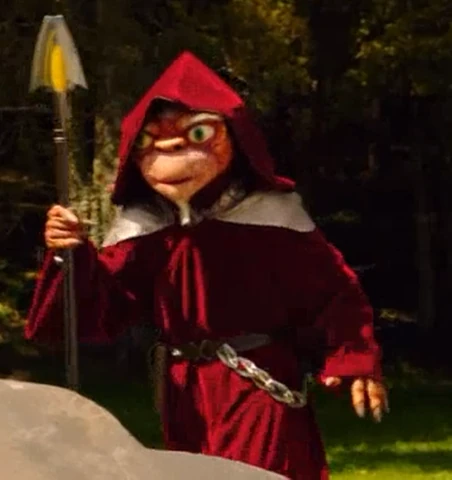
Keeper is the mentor of the season and well, his design is alright. He looks like an older, wiser ET that turned orange. However, with only 3-5 minutes of screen time in this episode, I can honestly say that he has already done more than the last two mentors. He seems to have some degree of fighting skills given that he fought Fury for a brief bit after sending out the energems.
One of the surprising things is that the monster of the week actually went right for the kill the moment he knocked the energems away from Shelby and Tyler. He only failed because he was about a second too late. In an interesting choice, only Tyler and Shelby actually morph and fight during this episode. The fight scene that followed could've used some work. It feels out of synch due to all the wireworks and it didn't feel like it flowed naturally. The CGI for the T-Rex zord...yeah there was no way I could take that seriously when it attacked the monster of the week.

Second Episode: 
Riley's introduction is a rather odd choice in terms of skill set. He is a rancher but also a fencer which doesn't really mesh convincingly with KyoryuGreen's reverse grip sword-style in the footage used later in the episode. In an unmorphed fight scene, Riley manages to beat out Fury in a sword fight to protect the green energem. Chase and Koda are revealed to already have their powers. I'm actually a bit surprised about Koda's lines. I half-expected him to speak fluently despite being a caveman. Sort of glad they went with the fractured dialogue. Though the caveman thing wasn't actually mentioned in the show but I think they'll probably give his backstory soon. The morphed fight is sadly Kyoryuger stock footage from their premier.

Final Thoughts: I definitely needed this. I went into this expecting Megaforce levels of cash-in and honestly, I'm pleasantly surprised. While not a perfect start, I can at least say it looks like they're trying with this one so I'm relatively happy. Its rather refreshing after the last four years and I'm looking forward to seeing where they'll go with this.

Tuesday, January 6, 2015

Yoshinori Okamoto : a legendary actor in the sentai franchise


 Introduction 

As a 40 year old franchise, Super Sentai has a rich history, has evolved a lot, and has had plenty of actors, voice actors, suit actors who have been involved a lot in the franchise through the years. Among iconic actors, several may come to mind : Naoya Makoto, the first Red Ranger, or the actors who have played several times a ranger, such as Hiroshi Miyauchi (Aoranger in Gorenger, Big One in JAKQ, but also the mentor Miura in Ohranger), Shiro Izumi (Change Pegasus and the first Sixth ranger, Dragonranger Burai), Teruaki Ogawa (Ninjared and Kurokishi), Kenji Ohba (Battle Kenya and Denziblue)  Jun'ichi Haruta (Goggle Black and Dynablack), the latter two having been suit actors as well, notably in their shows as actors. For iconic villain actors and actresses, Masashi Ishibashi (main villain in JAKQ, Battle Fever (Hedder), Dynaman (General Kar), Turboranger (Redha)), Machiko Soga (Queen Hedrian in Denziman and Sun Vulcan, Bandora in Zyuranger), Yutaka Hirose (Ley Wanda in Flashman, Doctor Kemp in Liveman, Tranza in Jetman, Jin in Dairanger), Akiko Amamatsuri (Doctor Mazenda in Liveman, Gara in Dairanger) come in mind. Some actors also may have been both hero and villain, such as Sayoko Hagiwara (Dynapink and Ley Nefel) or Kihachiro Uemura (Green Flash and Chevalier in Fiveman). Most of those actors have also guest starred in other shows as well.
While suit actors and voice actors are less visible, they're even more involved, since they're often involved in much more shows than live actors. While a live actor can play a major role in just a few series when a suit actor can be involved in much more, since they're used year after year : a classic example is Kazuo Niibori, who was the suit actors of almost all Red rangers from Gorenger through Jetman (about a dozen shows).
Likewise, voice actors are often used year after year, and in several cases, in main roles : classic examples include Seizo Kaito, who played the Big Bads in Changeman and Maskman (Bazoo and Zeba), as well as guest starring in other series, or Shozo Iizuka, who played plenty of villains in early sentai series, and even played a major villain as late as Goseiger (Mons Drake).

Yoshinori Okamoto is in my opinion one of the most iconic actors of the sentai franchise, because he can boast of being at once an iconic live actor, iconic suit actor and iconic voice actor, having been involved in several shows as a live actor, while being a very regular suit actor, as well as voicing some of his suit characters. He has an incredibly long and rich career in the sentai franchise, starting being involved since ethe beginning, and then being active during most of the franchise. He's one of the most iconic actors playing villains, but his involvment in the franchise goes even further of course.

Yoshinori Okamoto : an incredible career

1) Beginnings : pre-Soda sentai

The first sentai series in which Yoshinori Okamoto was involved was also the first sentai series as well : Gorenger : ironically, for an actor who would play plenty of villains later, he started being the suit actor of the main heroes in late episodes , such as Aoranger as well as being sometimes the replacement of Kenji Ohba as Akaranger. He was also a suit actor for heroes in  JAKQ as Space Ace (Red) (with Junichi Haruta) and Big One, and Sun Vulcan as Vul Eagle (with Niibori). But very early he also started being a suit actor in villainous roles, first in mook roles in Battle Fever and Denziman. He also played the human form of a Monster of the Week in Sun Vulcan (Spider Monger).

2) The Soda era of sentai : a major villain actor

However, it's during the 80' and the sentai shows penned by Hirohisa Soda that Yoshinori Okamoto would have his most interesting roles, the ones who made him a true icon in the sentai franchise and one of its most memorable villain actors.

Okamoto's first main villain role was first a pure suit acting role : Bio Hunter Silva in Bioman (Silva was voice by Kazuo Hayashi) ; however, the suit acting played a major role in making Silva being such a scary and threatening villain, and Okamoto's role can't be underestimated. Okamoto also suit played and voiced the first Mechaclone made by Doctor Man in episode 28, and when Doctor Man was seemingly killed by the Big Three, he did everything to avenge his master, showing his deep loyalty towards his makers, even convincing the Bioman to help him. His loyalty was poorly rewarded, since he fell as a victim of Dr Man's trap against the Bioman. This role as Mechaclone n°1 allowed Okamoto to show some dramatic skills, by playing a mook with personality and honor.  

a) Buuba

However, his first major role in the franchise as a real actor was in the following show, Changeman. Yoshinori Okamoto played Buuba, the Space Pirate who worked for the Gozma Empire. Buuba was his first role as a main character which he would both play AND voice. While Buuba's face was mostly covered by a mask, Yoshinori Okamoto was still able to make him an iconic villain thanks to his remarkable low voice, his great action skills, and of course, because Soda managed to make him both a ruthless character, but also with a more complex side.
Buuba was a ruthless pirate who was cruel, sadistic, and a fierce and violent warrior. Most of the villains played by Okamoto would show a similar characterization. Buuba would gloat while seeing his enemies in danger, would show his anger when his plans were foiled. Few actors were able to express as much rage and frustration in the classic "Onore" screams than Okamoto. As a stunt actor, Okamoto also allowed his characters to have remarkable fight scenes, and fight scenes involving Buuba were always intense.
But Okamoto also was able to display the more complex side of Buuba : a pirate who longed for his freedom, instead of having to be Bazoo's slave, a man who didn't have a home planet he could go back, and a man who cared for his fellow general, Shima. Okamoto also showed dramatic talent in the two episodes which explored Buuba's more sensitive side : the episode where he meets his former fellow female companion, who wanted him to go with him again, and how he was torn between his desire to go with her and the fact he had to fight for Bazoo ; and of course his final episode, where he decided to sacrifice himself to free Shima of Bazoo's slavery : not only he had an epic final battle with ChangeDragon (with Beethoven's ninth symphony as a musical background), he also did a very touching final selfless act, allowing Shima to have the freedom and a chance to go back home he would never had.
Buuba was the first real acting role in the sentai franchise for Okamoto, and he was lucky to be able to start at a time sentai villains started being more complex instead of  "pure evil" antagonists. While the lower part of his face was covered, he still act with his body, his voice and the upper part of his face, including the eyes.

b) Bo Gardan and Oyobu

Yoshinori Okamoto would also have important roles in the two follwong sentai series, Flashman and Maskman.
In Flashman, Okamoto played Bo Gardan, a strong warrior who's Alien Hunter's Ser Kaura's friend. While Gardan only appears in about 5 episodes, it allowed Okamoto to play with his face completely shown, allowing him to be a true face actor during several episode, playing a character with a strong connection with a main character. Bo Gardan was your classic Okamoto warrior : strong, brutal, but also loyal and honorable. While he only appeared shortly, he was still a great opportunity for Okamoto to do face acting. Okamoto alos was the suit actor for Hero Titan.

In Maskman, Okamoto would play again a fierce warrior : underground ninja Oyobu. Oyobu was the warrior servant of commander Baraba and was very loyal to him. He fought the Maskman in manu battles, being a dangerous opponent with his ninja skills and his great speed. While he was loyal to Baraba and Emepror Zeba, he deeply distrusted Kiros,and disapproved when Barabas joined Kiros in a plot involving the frozen Princess Iyal to trap Takeru/Red Mask. He ended up frozen in the Hells's Wind, but used his fire powers to thaw himself. Because he felt Baraba betrayed him when he joined Kiros, he refused to join his Barabs in the latter's final fight. When Kiros asked him to use his fire powers to unfreeze Iyal, he refused, showing once again his unyieldable loyalty to Zeba and Tube. At the end, he sacrificed his life to raise the underground Castle, dying to serve his emperor : even if he was used by Zeba, he accepted it, because he felt it was his duty.
Oyobu was less hot-blooded than most of Okamoto's villains, and he was usually the stoic compared to Baraba's hot blooded personality. However, he was still a very skilled warrior and dangerous enemy.
 Like Buuba, Oyobu's lower face was partially covered, and he only used the upper part of his face, especially his eyes, in facial expressions. However, other than that, it was another regular villain for Okamoto.

c) Doctor Ashura

It's in Chojuu Sentai Liveman that Okamoto would have his best role in the franchise, when he could use all the range of his talent, playing once again a regular villain, and a pretty complex one as well.
Okamoto plays Busujima Arashi, a low life thug, poorly educated (he's unable to count without his fingers), but very strong physically. Arashi isn't very smart, and suffer a lot for it, especially with the Academy nearby bringing together the smartest minds on Earth. As such, he hates everyone linked to the Academy, including the Liveman. One day, he encountered strong savages apemen created by Volt, and managed by himself to overcome them, and even use them for his crimes, startling the Volt members, including Professor Bias. Impressed by Arashi's amazing physical strength, Bias took the criminal with him and managed to enhance his intellectual abilities. Now having become a very smart man, Arashi took the identity of Dr Ashura, and started his career as Ashura by taking revenge on intellectuals by kidnapping professors, submitting them to a quiz, and killing them if he managed to outsmart them. Ashura took revenge on his suffering because of his lack of intelligence as Arashi by using his newfound intelligence. 
Ashura became very quickly a very dangerous enemy to the Liveman : he was already very strong, but his enhanced intelligence made him even deadlier, because he was able to create technology, such as his "Cyber Bunshin", allowing him to create three humanoid monsters who could help him in his attacks. By becoming smarter, Ashura took great pleasure in seeing his rivals struggling, often mocking them for their failures.He alos loved tormenting the Liveman.
An interesting element of Ashura is that, unlike his fellow Volt, he didn't join professor Bias because he desired it, like Kemp, Mazenda and Oblar, or because he was built by him, like Guildos and Butchy, but because Bias kidnapped him. While he was grateful for his enhanced intelligence, he was also more prone to question Bias's motivations, for example, when the latter wanted the death of a young girl from the future. During a plot involving a hacker Brain Monster, Ashura uncovered a secret file about Bias and wanted to check it.
However, Bias never had any real respect for Ashura, because he knew his intelligence wasn't natural, unlike Kemp and Mazenda's, and he only used him to create a rival to his two favorite students. He knew Ashura would never have the 1000 point brain he wanted, and once he felt Ashura was of no use or even a danger for him, because he would uncover his secrets, Bias decided to strip him of his intelligence and to kill him.
Ashura survived a murder attempt, only to discover he was Arashi again, an uneducated and stupid thug. He was furious against Bias, humiliated for having been used like a pawn, humiliated to have lost his intelligence he was so happy to have.
However, despite having lost his intellectual abilities, he had still his strength, his courage, and his recklessness. After a last meeting with Gou, the former Doctor Oblar who had left Volt, and after at last knowing a answer of a simple multiplication, he decided to have a final revenge on Bias by destroying a powerful Brain Monster in a suicide attack.
Ashura is by far the most interesting character Yoshinori Okamoto played in the sentai franchise. While Ashura had still the classic "Okamoto villain" elements, such as great fighting abilities and arrogance, he was also a very complex character, and Okamoto could really use his acting talents. The tragedy of Arashi/Ashura is the pain of lacking intelligence and education, especially when confronted with smarter people. In a show like Liveman in which both protagonists and antagonists were gifted people, Arashi was the perfect foil, lacking in everything the other characters had, and being very bitter about it, and trying to compensate using brute force. When Bias gave him enhanced intellectual abilities, Arashi had at last, as Dr Ashura, what he desired so much : feeling equal and even superior to all those smart people of the academy who reminded him of how stupid he was. With intelligence of course, came arrogance, and Ashura, who was already arrogant as Arashi, now, could also boast of his intelligence. While, as Arashi, he was arrogant to try to compensate his low self esteem due to his lack of education, as Ashura, he wanted to humiliate others the same way he felt humiliated before. But none of the non robotic Volt members did have any real respect for Ashura, who wasn't truly smart because of real abilities, but only because of an artificial modification. At the end, Ashura was stilll the idiot among the more intelligent ones, even with his enhanced mind.
When he became Arashi again, Ashura missed the intelligence he had before. But he also realized that he still had his true skills, his fighting skills, his bravery. At the end, he accepted the fact that he was never meant to be an intellectual, and after at last being told the answer of a algebra problem which tormented him for so long, he found peace within himself, and died with dignity destroying a dangerous Zuno Beast at the same time,  doing the best he could to stop Bias's evil plans to get his revenge on him.
Yoshinori Okamoto was able to play a real dramatic role, well beyond a more classic "ruthless warrior", but a man who was evil, but also with torments and doubts, and was on equal footing with the other main villain actors, such as and Hirose, Amamatsuri and Nakata. With Ashura, Okamoto wasn't just a suit actor or a voice actor, but a real actor with a real dramatic role, who was able to play a complex character.

3) Early 90' sentai : some guest appearances and Signalman

After Liveman, Okamoto slowed his involvement in the sentai franchise, mostly coming back for guest appearances, notably in the Sugimura era.
He did a very short appearance as a martial arc master in episode 30 of Jetman. 
Afterwards, he played the Yamato King in Zyuranger, adoptive father of Tyrannoranger Geki, who had a memorable sword fight with Geki and Burai's real father, played by Tokimichi Takahashi, in which he ended victorious.
In Dairanger, he guest starred in several episodes Touhouten, a Gorma warrior, who was working with three other warriors as the four Deva Kings and was able to fuse with them to form a four-headed Gouma. He appeared in the four episode KiryokuBazooka/Daimugen arc. In Kakuranger, he played Saizou's ancestor in the early episodes (so, technically, the first Ninjablue  ;) ), as well as an evil warrior in a standalone episode. In Ohranger, he played a MOTW, voice, and suit and a masked  human form, Baranightmare, a renegade Machinebeast, but still an incredibly evil one, who collects little girls and keeps them in comas to use them in his demented games : he's pretty much how a sentai episode can display a somewhat pedophile character : Okamoto's voice helps make that monster feel incredibly creepy. Most of the cases, Okamoto was involved as a live actor.
However, Carranger was the next show where Okamoto would play a major role, being the suit actor for Signalman. For the first time since a long time, Okamoto only played a character as a suit actor, as Signalman had a different voice actor. Okamoto pretty much played against type, not only as a good guy, but also as a comedic character. Okamoto had the opportunity to have a comedic body language to play such a character, and it was a nice change, and it's obvious that he had a significant contribution in making Signalman a funny character.


4) Early 2000' sentai : return to major roles

Okamoto's work on sentai almost stopped after Carranger , with only a few guest appearances once or twice, notably as a guardian of the Londarz prison in the first episode of Timeranger.
However, 2002 was the big comeback in the sentai franchise for Yoshinori Okamoto. In Ninpuu Sentai Hurricanger, he would play for the first time in almost 15 years a main character in a sentai series, and a villainous one. Interestingly, Hurricanger was making several homages to Liveman, with the main heroes having similar colors and mechas as the Liveman, and having Okamoto involved in a major role was also part of the tribute. Okamoto was the suit actor AND the voice actor of the Fifth Dark spear of the Jakanja, Sargain. Sargain was actually an insect like creature who lived in an robotic body he made for himself. This robotic body was so well done that Sargain was able to be a skilled swordman with his body, and was a very dangerous threat for the Hurricanger. Sargain was also a skilled engineer, being able to build mechanic monsters aiming at making Earth rot and/or defeating the Hurricanger. His skills, both as a warrior and as a technical genius earned him the admiration of Wendinu and Furabijou, the two Jakanja kunoichi, who enjoyed working with him, and were deeply sad after his death. He was also able to build giant robots, to oppose the Hurricanger's and Gouraiger's. Sargain was a proud warrior, loyal to his leader Tao Zanto, and wanting to do his best to serve his master, always angry when someone doubt his abilities. He especially hated Sandaaru, who was arrogant and condescending to him and his plans, and didn't trust the devious shark like ninja. His conflict with Sandaaru would end up being his downfall, with Sandaaru killing him traitorously, just after Sargain had a harsh fight with the Hurricanger and their allies.
Okamoto was again able to play the hot blooded villain, even if in this case, he was only doing suit acting and voice acting. He did also guest starred as the father of Gozen sama. Lastly, he did a short cameo as an human double of Bat the Rumba, the villain of the 10 years after movie.

Okamoto's next major work was in Abaranger. He was the suit actor of the "Dark Armor Knight", meaning that when a character was using the evil armor, he was suit acted by Okamoto. It was an interesting opportunity for Okamoto, since in Abaranger, several characters have been using the evil armor, and as such Okamoto was able to play different characters in a same show : first, he played Messenger of Darkness Gaildon (aka Mizuho), in the first episodes of the show, and play him as a ruthless and brutal warrior. Even if Gaildon only lasted two episodes, Okamoto's suit acting helped him stay memorable. During the next 30 episodes, the user of the armor was Destruction Messenger Jeanne, and as such Okamoto had the opportunity to suit play for the first time a villainess.Once again, Okamoto's suit acting played a role in displaying Jeanne's brutality whenever she used the armor, but also her vulnerability and doubts, first when she didn't have complete control of it, and then, when the mysterious girl was reminding of her past. Afterwards, the next user was Asuka, who, in that case, was pretty much struggling to try to keep control of the armor's powers, and Okamoto clearly showed Asuka's struggles, but also when he lost the fight and was being a brutal enemy against his will. Okamoto was also the suit actor of Dezmogevirus, an entity looking like the evil armor but was actually part of the Big Bad, and he even played ... a training ball, made to look like a warrior with the dark armor in a virtual training field.
However, in all those roles, Okamoto's suit actor really showed the evil armor as a brutal power, yearning for destruction and brutality, and you really felt that, even with different people using it, the armor felt like it had a life on its own, even if his suit acting was different with each host. Okamoto also guest starred as an evil warrior in the Edo era.

Afterwards, Okamoto was involved in Dekaranger, where he was the suit actor of the only regular villain of the show, Agent Abrella. It was an interesting role, since Abrella wasn't the "brutal warrior" type, but rather a sleazy merchant, who was mostly acting behind the scenes. it was a pretty new kind of role for Okamoto, who here played a character who did only seldom confront directly the heroes, but was more doing business with other alien criminals. While most of Okamoto's villains are rought characters, Abrella, as a bat like creature, needed a much smoother approch in body acting.
Okamoto also was guest starred as the suit, human form and voice actor of an Alienizer, Aladonian Gyanjaba, a sadistic criminal who used an innocent alien for his crimes and who had no problem threatening her life in the most ruthless ways.
He also played an Alienizer  in the Dekaranger movie, Algolian Whinsky, voice acting, suit acting and even briefly, playing his human form,  alongside his former Liveman fellow villainess Akiko Amamatsuri.

Afterwards, Okamoto was less involved in sentai, but still guest starred in Gekiranger as a loud, but ultimately nice bathowner who taught a nice lesson to Jan/Gekired.
And of course, he came back in Gokaiger, where he, once again, was the suit actor for heroes, Akaranger and Big One.

5) Akibaranger : the big tribute

Okamoto appeared in episode 8 of season 2 of Akibaranger, and this episode was pretty much a big tribute of his big career in sentai, in the same way Kazuo Niibori had his tribute in season 1 as the major Red ranger suit actor. Okamoto appeared as himself in the show, and met the main heroes, and had the opportunity to explain how he wanted to make his villain roles look good, notably when his characters were defeated. The MOTW of the episode was pretty much imitating most of the villains played by Okamoto, and the final battle between Akibared and the villain was pretty much a replaying of the classic Changedragon vs Buuba fight, once of Okamoto's most memorable final fights.
It was a nice opportunity to remind viewers of the important role Yoshinoro Okamoto has played in his long career in the sentai franchise, and how much he helped making villains feel awesome.